
Following the conclusion of the Songkran festival, Pattaya city authorities launched a full-scale street clean-up operation in key public areas. The effort began early in the morning and included hundreds of municipal workers and specialized equipment. According to Pattaya news coverage, multiple zones were prioritized for fast response.
Timing and Deployment of Street Clean-Up Crews
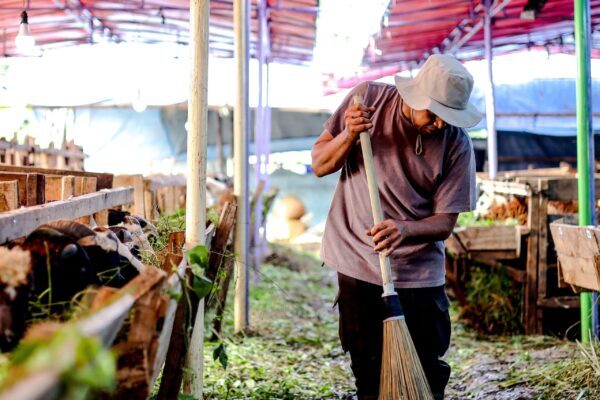
City crews began mobilizing around 05:45, before commercial activity resumed. The timing wasn’t coincidental. Local sweepers were already positioned along Beach Road while plastic buckets and discarded foam clung to drainage edges. One supervisor near Soi 13 paused to adjust his gloves, nodded at a colleague, and resumed brushing sand toward the curb, his broomstick worn smooth from use. It’s this kind of early movement that hints at a larger choreography, not visible at first glance.
By 07:00, deployment expanded to include auxiliary sanitation units. A brief interruption near the Dolphin Roundabout, caused by an overloaded disposal truck turning too wide, slowed the tempo but did not stall the overall pace. Teams regrouped with little fanfare.
The timing speaks less about urgency and more about routine. Songkran brings volume, and volume leaves layers. The response, though rehearsed, adapted, and that adaptation left traces: hesitations, route reversals, even pauses long enough to reconsider a segment of pavement still too damp for sweeping.
Municipal Strategy After the Songkran Festival
Planning for post-festival sanitation begins well before the first splash. In fact, documentation from prior years suggests that draft logistics circulate as early as February. But what seems methodical on paper often mutates in practice. The 2025 Songkran season brought higher foot traffic along Pattaya Klang, unexpectedly rerouting pedestrian movement and, by extension, trash accumulation zones.
Officials anticipated major congestion near major intersections, yet the densest waste was logged behind secondary venues: narrow alleys adjacent to food carts, temporary stage zones. It wasn’t the official parade routes that bore the brunt, it was where spectators stalled longest, often unaccounted for in spreadsheets.
At one point near Second Road, a team leader briefly hesitated. His group was meant to proceed east, but the volume of plastic and spent water bags led him south instead. A minor deviation, perhaps. But it revealed an embedded awareness: strategy here isn’t rigid, it’s responsive, built on instinct layered over instruction. And on residue.
Equipment and Teams Used in Pattaya’s Cleaning Zones
Water trucks operated in intervals, two per sector, rotating in cycles no longer than 20 minutes. Their presence was more felt than seen: a fine mist on nearby signage, the damp shimmer of early pavement. Manual teams followed, equipped with nylon push brooms, high-pressure hoses, and chemical sprayers for specific residues.
One unit near Soi Buakhao opted to bypass a stagnant puddle. Possibly an oversight. Possibly intentional, the equipment wasn’t designed for absorption. That’s where mop teams stepped in, trailing silently behind the heavier tools.
Zones were color-coded on laminated cards pinned to vests. Pink for priority routes, yellow for overflow. But such distinctions blurred quickly. By mid-morning, task flow depended less on maps and more on judgment, and how long each worker paused before moving on.